

Restoration of Floodplain Grasslands in SITA NATURE PARK
Nature Reserve “Sita and Pededze Floodplain”
At the place where the Sita River flows into the Pededze, lies the 870-hectare nature reserve “Sitas and Pededzes paliene” (Sita and Pededze Floodplain). It was established to preserve the characteristic values of a natural river floodplain – its diversity of habitats and species that depend on seasonal flooding.
75% of the reserve is covered by 11 habitats of European Union importance, mainly floodplain grasslands, which provide a home for more than 43 rare and protected species.
Water Regime in the Floodplain
Water Retention
A river floodplain is a low valley near a river that regularly floods during high-water periods. When the water level rises quickly – during spring ice melt or heavy rainfall – the floodplain acts as a natural water reservoir. Water flows in, accumulates, and as the river level drops, gradually drains away or infiltrates into the soil.
This means that at the peak of flooding, water is retained in the “pockets” of the floodplain rather than being rapidly carried downstream, thus reducing the flood risk in lower river sections and populated areas.
In places where floodplains have been drained or destroyed, flood and rainwater are no longer retained – they rush downstream, increasing the risk of flooding and damage to infrastructure.
Purification and Renewal
In spring, when the river overflows into the floodplain, a seasonal purification and renewal process begins. Floodwaters deposit nutrients, enriching the soil and improving its fertility, and wash away part of the dead vegetation.
In the shallow, warm water, fish spawn and their larvae develop, later returning to the river as the water recedes. Frogs spawn in pools left behind, and after the water withdraws, many bird species nest in the floodplain grasslands.

Biodiversity in the Sita and Pededze Floodplain
Species diversity in the floodplain is supported by moisture and soil conditions, as well as proper management. Organic matter carried in during floods enriches the soil, creating favourable conditions for various plant species.
Plants in the Floodplain Grassland
Nutrient-rich soils promote a diversity of flowering plants. In managed floodplain meadows, the following species are common:
- Poa palustris, Angelica sylvestris, Myosotis palustris, Carex acuta, Cirsium palustre, Carex nigra, Comarum palustre, Trollius europaeus, Alopecurus pratensis, Veronica longifolia, Filipendula ulmaria, Valeriana officinalis, Lythrum salicaria.
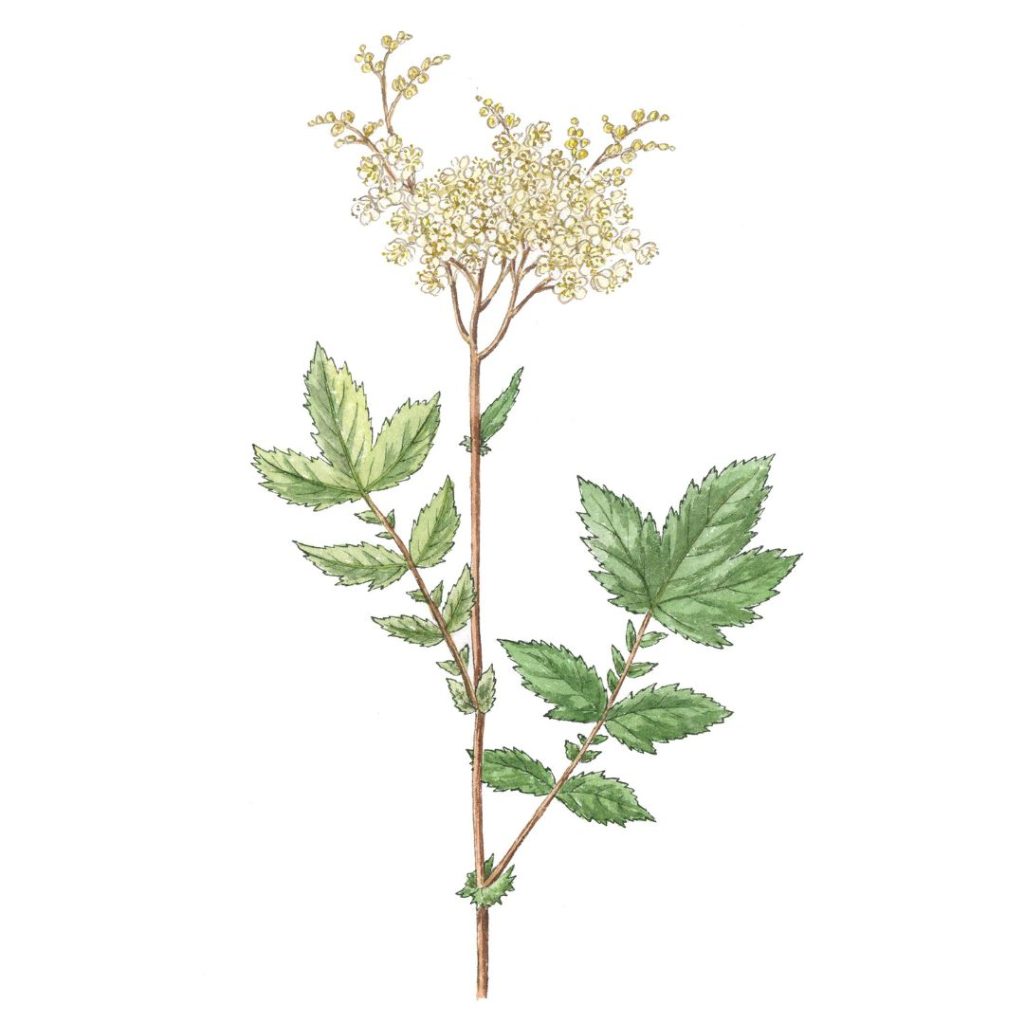


Specially protected plant species:
- Dactylorhiza incarnata, Dactylorhiza baltica, Platanthera bifolia, Platanthera chlorantha.

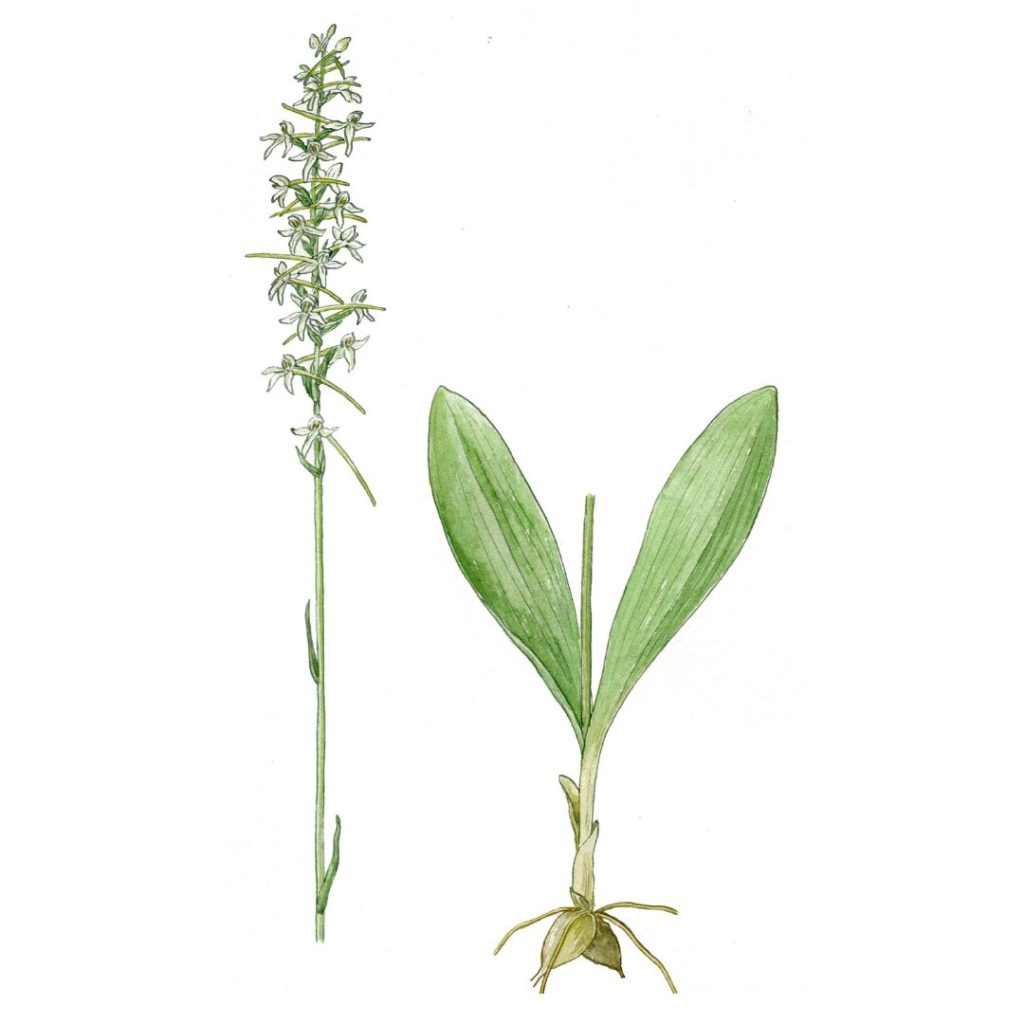

During the day, the meadows are visited by butterflies such as the marsh fritillary Euphydryas aurinia, which depends on Succisa pratensis. The area is also inhabited by species such as Liocola marmorata, Hoplia farinosa, Leptura quadrifasciata, Thymelicus sylvestris, Lycaena dispar, and many other invertebrates.
A particularly protected beetle – the hermit beetle Osmoderma eremita, which develops in hollows of old trees – is also found here.
In summer evenings, pollinators attracted by the sweet scent of night-flowering orchids can be observed in the meadows. In the dark, they become prey for the northern bat Eptesicus nilssonii and other bat species.
If floodplains are not managed, stands of expansive species quickly develop:
Urtica dioica, Anthriscus sylvestris, Calamagrostis canescens, Phalaroides arundinacea, Aegopodium podagraria, Filipendula ulmaria.

Expansive stand of Aegopodium podagraria. Photo: J. Žukova, 2025
Birds in the Floodplain Grassland
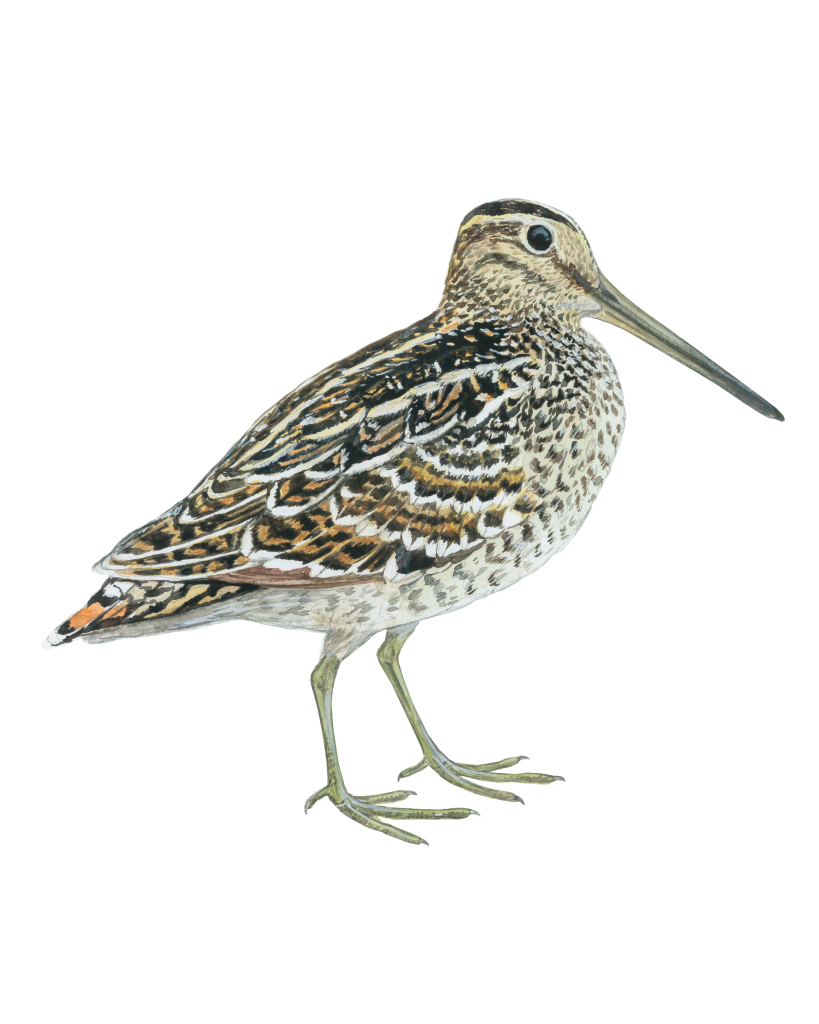
Floodplain meadows are especially suitable for several wader species.
The common snipe Gallinago gallinago and the great snipe Gallinago media feed mainly on soil invertebrates, but their courtship behaviour is very different.
The common snipe performs display flights during which it “sings” using tail feathers, producing a distinctive bleating sound. The great snipe, however, sings vocally in collective ground displays where several dozen birds may gather.
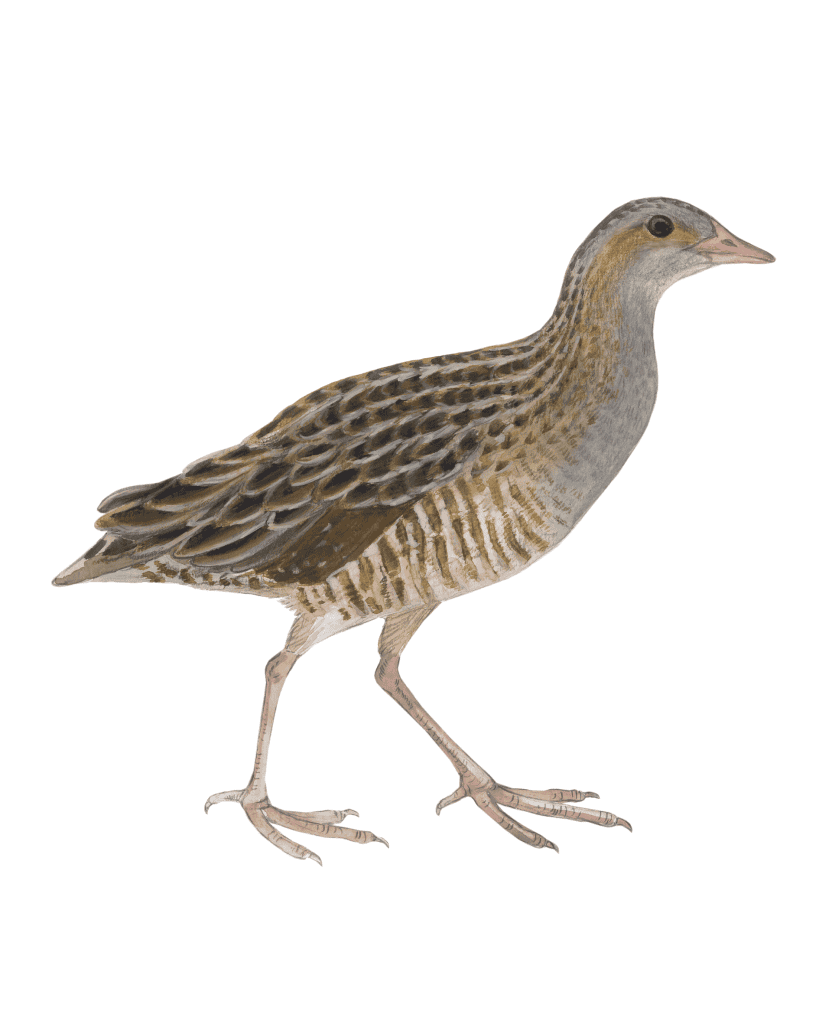
A species that is difficult to see but easily heard at night and dusk – from mid-May to July – is the corncrake Crex crex, whose males produce the unmistakable, monotonously repeated call “krek-krek-krek”.
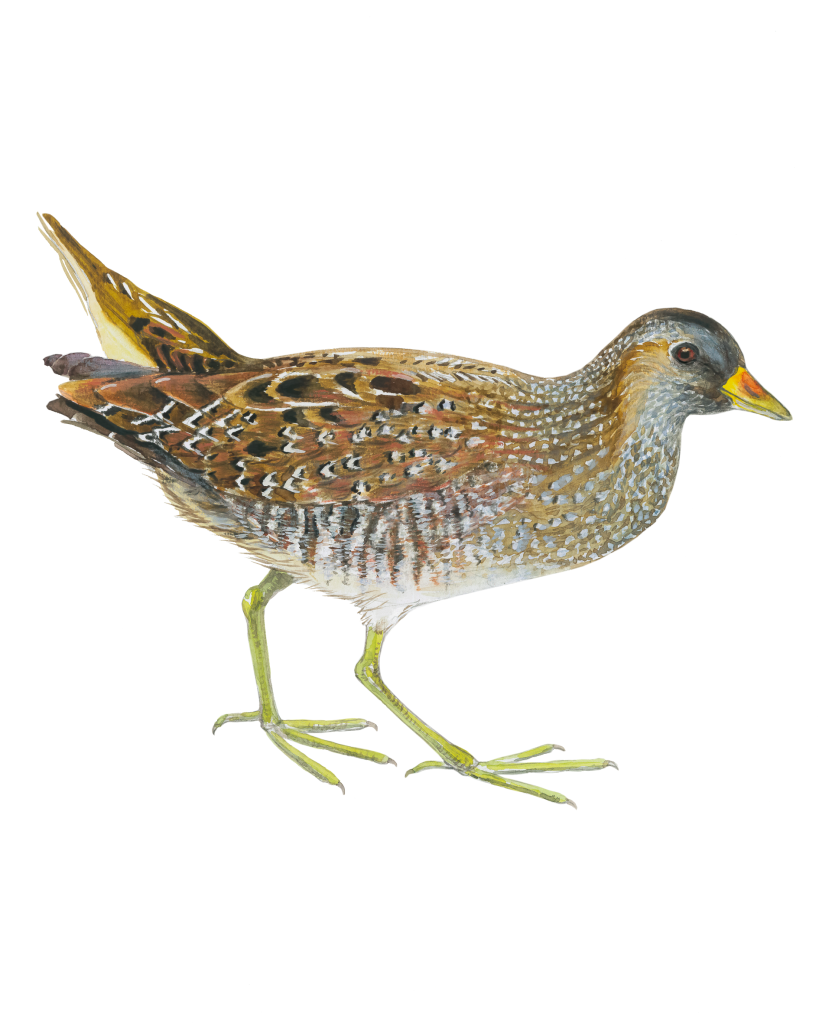
The spotted crake Porzana porzana can be recognised by its short, ringing whistles “uit-uit-uit”.
In the meadows you may find the increasingly rare yellow wagtail Motacilla flava. The red-backed shrike Lanius collurio may nest in isolated shrub patches. Whinchat Saxicola rubetra uses tall meadow plants or shrubs as lookout posts.
The bluethroat Luscinia svecica, which prefers waterside areas overgrown with shrubs and reeds, has also been observed in the Sita and Pededze Floodplain.

The bluethroat Luscinia svecica
Project LIFE MarshMeadows (2023–2027)
The goal of the project is to restore two large wetland complexes and ecosystem functions in three Natura 2000 sites in Latvia and Lithuania, including the Sita and Pededze floodplain.
Natura 2000 is the EU network of specially protected areas designed to safeguard species and habitats.
The project restores the moisture regime and grassland habitats of floodplain meadows by removing overgrowth and establishing a grazing-based management system.
Hydrological regimes and EU-priority habitats are also being restored, and a long-term grazing management system is being introduced.
SIA “Sita Nature Park”
The Sitas and Pededze floodplain grasslands are managed by SIA “Sita Nature Park”. The Sita River flows through the entire project area.
In places where water levels change frequently and machine management is not always possible, grazing plays a key role in maintaining grassland and wetland habitats. Here, Hereford and Angus cattle are used to control shrub growth and maintain suitable conditions for species characteristic of floodplain grasslands.
The 100-hectare project area includes EU priority habitats:
6450* Floodplain grasslands and their three variations, as well as small areas of 6270* Species-rich pastures and grazed meadows.
This information is provided within the framework of the project “LIFE MarshMeadows: Piloting integrated wetland restoration approaches in Latvia and Lithuania”, which is co-financed by the European Union and the Ministry of Smart Administration and Regional Development in Latvia.
Views and opinions expressed are, however, those of the author(s) only and do not necessarily reflect those of the European Union or CINEA. Neither the European Union nor the granting authority can be held responsible for them.